Blog10 MIN READ

How new technology, public-private partnerships, and evolving markets are making this the moment for nuclear fuel recycling
Recently, the U.S. Department of Energy (DOE) issued a call for private-sector partners to deploy and operate nuclear fuel recycling and fuel fabrication facilities to support the deployment of advanced reactors. We sat down with Oklo’s VP of Fuel Recycling, Ed Petit de Mange, to ask what this means for the U.S. nuclear industry.
Before we dive in, tell me about yourself and your role at Oklo.
As the head of Oklo’s fuel recycling program, my purview is turning used nuclear material into fuel for advanced reactors. That includes the development and prototyping work, licensing, facility deployment, and the operational implementation to commercialize used nuclear fuel recycling. From kicking off this program in 2022, we have now built a great team that is executing on that mission.
Let’s start with the basics. What are nuclear fuel recycling and fuel fabrication–the areas covered in DOE’s program?
The easiest way to think about this is as a set of connected steps in the nuclear fuel cycle. The nuclear fuel cycle is the process of making and using nuclear fuel—from mining uranium, to fabricating it into fuel, to using that fuel in a reactor to produce power, and then managing the large amount of recoverable energy still found in the used fuel afterward. Today, most used fuel is set aside after a single pass through a reactor. DOE’s program aims to accelerate development of technologies that can tap into that unused energy for commercial use.
Oklo is working on several parts of the fuel cycle: the reactor, recycling, and fuel fabrication. We are developing reactors that can run on different types of fuel, including recycled material. That integrated approach is important because the fuel, the recycling method, and the reactor are not separate challenges. They have been designed to work together.
We plan to recycle used fuel using pyroprocessing, an electrochemical process that is well suited to metal fuels and fast reactors, that separates out the useful materials while leaving behind a smaller amount of waste. From that material, we will fabricate new fuel assemblies that can go back into a reactor.
Fuel recycling is a core pillar of Oklo’s technology platform, allowing Oklo to recover up to 95% of the usable energy remaining in used nuclear fuel, reduce the long-term domestic waste footprint, and secure a reliable fuel supply for our advanced reactors.

Can you explain what this DOE program means? And how it impacts Oklo?
The DOE announcement creates a potential pathway for private companies to help turn used nuclear fuel from a long-term material management challenge into a domestic energy resource.
Used nuclear fuel still contains a large amount of recoverable energy. The U.S. has accumulated almost 100,000 metric tons of used nuclear fuel, much of it stored safely in casks at nuclear power plants around the country awaiting a long-term federal disposition pathway. If recovered and reused in advanced fast-fission power plants, that material could help support a more secure and scalable domestic nuclear fuel cycle.

For Oklo, this is significant because we have already begun building the technical and regulatory foundation for recycling, fuel fabrication, and reactor deployment. Oklo’s integrated model spans power, fuel, and isotopes, which means recycling is not a standalone concept but is part of a broader strategy to recover useful materials, convert them into advanced nuclear feedstocks, and put them to work in power generation and other high-value applications.
The DOE process could provide a federal partnership pathway to expand and accelerate that work, while aligning private-sector execution with national priorities around energy security, supply chain resilience, and responsible fuel management.
Why is this news important for the future of nuclear energy?
This program supports a full-lifecycle approach to the nuclear fuel cycle, including deployments of Oklo’s fast-fission power plant, the Aurora powerhouse.
Today, used nuclear fuel is often treated primarily as a waste stream, but it still contains significant usable energy, with more than 95% of the potential energy remaining relative to what today’s reactors extract. Recycling allows that material to be recovered and reused under federal oversight.


Enabling recycling at scale will contribute to a more resilient domestic fuel supply, reduce the volume of material requiring long-term disposal, shorten the radiological lifespan of that material, and expand fuel availability for advanced reactors.
Has the U.S. attempted used nuclear fuel recycling before?
Yes, but not in a manner that led to sustained commercial deployment, and not using the type of technology Oklo will be using.
The U.S. explored recycling used nuclear fuel decades ago, and other countries including France and Russia have continued to use the PUREX method as part of their commercial fuel cycle to make MOX (mixed oxide) fuel.
However, the U.S. stepped away from commercial reprocessing. Enriched uranium for conventional light-water reactors was widely available and inexpensive, demand for advanced fuels was limited, and U.S. government could not settle on a durable policy stance. Additionally, the legacy PUREX technology creates a separated plutonium stream, which led to proliferation fears and contributed to broader policy resistance in the United States.
Today’s context is different. Advanced reactors are creating demand for new fuel types, domestic fuel supply has become constrained, and advanced recycling technologies can be designed around improved safety and safeguards compared with legacy PUREX/MOX approaches.
Wait, so what type of technology is Oklo deploying? Is it planning to use legacy reprocessing methods like PUREX technology to create MOX fuel?
Oklo is not using legacy PUREX reprocessing, nor intending to produce MOX fuel. We will be using a modern electrochemical recycling technology called pyroprocessing, which has been developed through decades of research at U.S. national laboratories. One important advantage of pyroprocessing is that it has the potential to be more cost-effective than PUREX and its similar variants. This has been one of our key drivers from the beginning.
Additionally, unlike PUREX, Oklo’s technology does not produce a separate plutonium stream. Instead, it recovers useful material in a mixed form that is better suited for fast reactors and also inherently better supports safeguards and security requirements. The material can then be fabricated into fuel and used in Oklo’s powerhouses. In the reactor, fission consumes plutonium, turning it into lighter elements, while producing energy.
Okay, that’s really cool. But why now? Why do you think DOE and others are going all-in on this?
Three things have shifted at the same time.
First, demand. There is a growing need for power, and advanced reactors have the potential to help meet that need. Many of those reactors will require advanced fuels that are not widely available today in the United States.
Second, supply pressure. The U.S. has limited domestic enrichment capacity for advanced fuels and is working to reduce reliance on uncertain international supply chains.
Third, technology. Modern approaches, like the pyroprocessing technology Oklo plans to deploy, are designed to be smaller, more modular, and more tightly integrated with fuel fabrication than older systems. The pyroprocessing fuel cycle also supports repeated recycling over time, helping make maximal use of the fuel and reduce waste.
Put together, recycling is no longer just about waste. It’s becoming part of how fuel can be supplied to advanced reactors and, ultimately, how we can power the country.
What projects does Oklo have currently in the recycling and fuel fabrication space? Are they ready to deploy?
Oklo’s approach is intentionally integrated: reactor design, fuel design, and recycling technology are being developed as connected parts of the same system. That matters because the elements can all be optimized together.
At Oklo, we’re developing pyroprocessing to provide cost-competitive fuel and to support a secure, domestic fuel supply for advanced reactors, particularly our Aurora powerhouses.
Rather than treating fuel supply as a separate upstream challenge, our approach is to integrate recycling, fuel supply, and fuel fabrication into a cohesive system. From a technical standpoint, this supports a more predictable and resilient fuel lifecycle that is aligned with real reactor needs while maintaining strong safeguards and accountability.
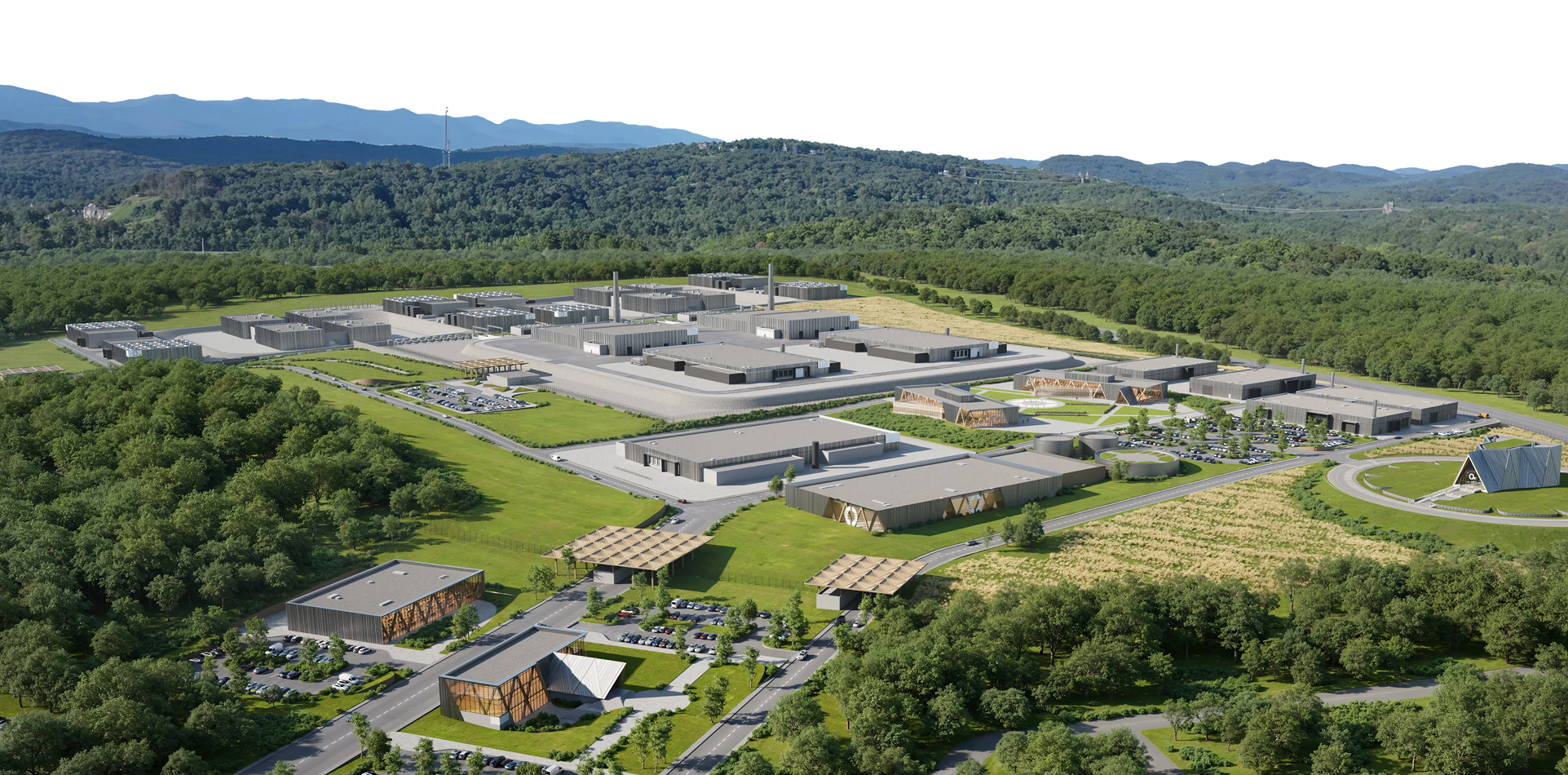
We are steadily advancing the regulatory and authorization processes for the fuel recycling facility in Oak Ridge, Tennessee, and the Aurora Fuel Fabrication Facility, or A3F, in Idaho.
In Oak Ridge, Oklo has completed our planned pre-application engagement with the U.S. Nuclear Regulatory Commission (NRC) and are now conducting an application readiness review, where the NRC evaluates application materials ahead of a formal license submission.
Learn more on our regulatory page →

What would success look like following this DOE initiative?
Successful deployment would support cost-competitive, stable, firm, clean power in the U.S. by establishing a commercial, industry-led, domestic recycling capability. That capability would support a more integrated nuclear fuel cycle, where used fuel is treated as a long-term energy resource and managed accordingly, rather than only as a disposal challenge.
More broadly, it would demonstrate that used fuel can be managed through systems that combine technical innovation with federal oversight, physical protection, safeguards, and long-term operational reliability.
And for the country, success would mean changing how we think about used nuclear fuel altogether. Instead of leaving a valuable energy resource sitting at sites across the country, we can recover that energy, strengthen the domestic fuel supply, and put it back to work powering homes, businesses, and industry.
The U.S. already has the material, decades of technical expertise, and growing demand for advanced nuclear energy. What’s changing now is the opportunity to bring those pieces together at commercial scale. That’s what makes this moment so important: recycling can become part of the infrastructure we need to build a more secure, abundant, and durable American energy system.
Explore similar content